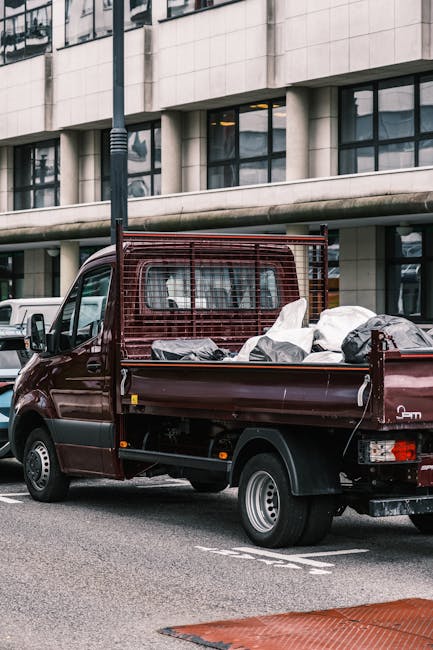
Avoid Hidden Fees When Booking Rubbish Removal in Highgate
If you are booking rubbish removal in Highgate, the headline price is only part of the story. The real difference between a smooth job and an annoying one usually comes down to the small print: access charges, labour add-ons, restricted waste fees, parking complications, and the old favourite, the "we'll just confirm on arrival" surprise. That is exactly why learning how to avoid hidden fees when booking rubbish removal in Highgate matters before you agree to anything.
In a busy part of North London, where streets can be tight, parking can be awkward, and jobs often involve mixed waste from homes, flats, offices, or building works, a clear quote is worth its weight in gold. This guide walks you through what to check, what to ask, and how to compare providers properly so you can book with confidence rather than crossing your fingers.
One quick note: a fair price does not have to be the cheapest price. It just has to be transparent. That's the bit people tend to forget. And once you know what to look for, it becomes much easier to spot the difference.
Why Avoid Hidden Fees When Booking Rubbish Removal in Highgate Matters
Hidden fees are not just a nuisance. They can turn a reasonable rubbish removal job into an expensive one very quickly. A quote that looks fine at first glance may not include the full labour time, stair carries, bulky-item handling, congestion-related delays, or specialist disposal costs. If you are clearing a flat, garage, loft, or office, those extras can creep in before you have even finished explaining the job.
Highgate has its own practical quirks. Some properties are tucked away, some have limited kerb space, and some clearances involve awkward access through communal entrances or basements. A provider that does not ask the right questions may quote too low simply to win the booking. Then, when the team arrives and sees the reality on site, the price changes. Not ideal. Not fair either.
There is also the trust factor. Transparent pricing tells you a lot about how a company works. If the quote is clear, the terms are easy to understand, and the process feels calm and professional, that usually reflects the service too. If the price is vague or rushed, it can be a warning sign.
For many readers, the concern is simple: "How do I know I'm not being overcharged?" The answer is to compare like with like, get the details in writing, and understand exactly what is included. That approach saves money, yes, but it also saves time and stress.
How Avoid Hidden Fees When Booking Rubbish Removal in Highgate Works
The process is easier than most people expect. First, you describe the waste clearly. Then the provider estimates the job based on volume, weight, type of waste, access, and labour. After that, they should confirm what is included in the price and what could change it. The better the information you give up front, the fewer surprises there should be later.
A good quote usually breaks down the service in plain language. For example, it may explain whether loading is included, whether the team will move items from upstairs, and whether special items such as appliances or upholstered furniture may cost more to dispose of. If a company is unclear at this stage, that is often where hidden charges start.
In practice, the quote process should work like this:
- You describe the rubbish and where it is located.
- The provider checks the likely labour and disposal requirements.
- Any access issues, parking concerns, or bulky items are discussed early.
- You receive a written or clearly stated price structure.
- Any possible extras are named before the booking is confirmed.
That sounds straightforward because, frankly, it should be. Yet many booking problems happen when people skip one of those steps. A quick phone call is fine, but the call has to be specific. "A bit of rubbish" is not enough. "Two sofas, a broken wardrobe, three bin bags, and a fridge from a second-floor flat" is much better.
If you want to understand pricing more fully before you book, the pricing and quotes information is a useful place to start. It is also wise to think about how secure and transparent the payment process feels, which is why payment and security should be part of your decision, not an afterthought.
Key Benefits and Practical Advantages
When you avoid hidden fees, you are not just saving money. You are making the whole job easier to plan. That matters whether you are clearing a home before a move, sorting a garden after a big tidy-up, or dealing with office waste that needs to go quickly and cleanly.
- Better budgeting: You know what the job is likely to cost before the team arrives.
- Less stress: No awkward last-minute price changes or "we found an extra charge" conversations.
- Faster decisions: A clear quote makes it easier to compare providers properly.
- More trust: Transparent pricing usually reflects a more professional service overall.
- Fewer delays: Clear waste descriptions reduce the risk of rework or on-site amendments.
There is a practical upside too. When you are not worrying about the invoice, you can focus on the actual clearance. That might sound obvious, but in real life it makes a difference. People often feel relieved the moment they know the cost is fixed or properly explained. It takes the edge off the whole day.
For larger projects, this becomes even more important. If you are arranging builders' waste clearance, loft clearance, or a full house clearance, unexpected extras can quickly distort your budget. Looking at related services such as builders' waste clearance, house clearance, or loft clearance can help you understand the type of job you need and the factors that may affect price.
Who This Is For and When It Makes Sense
This guide is useful for almost anyone booking waste removal in Highgate, but it is especially relevant if your waste is not simple or small. The more variables involved, the more important it becomes to get a clear, inclusive quote.
You should be extra careful if you are:
- clearing a flat with stairs, shared entrances, or limited parking
- disposing of heavy furniture, mattresses, or appliances
- removing builders' rubble, mixed renovation waste, or garden debris
- booking office waste removal where confidentiality or timing matters
- sorting a garage, loft, home, or garden clearance after a long build-up
- dealing with items that may need specialist disposal
It also makes sense if you are comparing two or three services and one quote seems suspiciously low. That low number can be real, but sometimes it is only the starting point. Once access, labour, or waste type is added, the final bill changes. Funny how that works, isn't it?
Small jobs can have hidden fees too. A single fridge, a mattress, or a sofa can attract different handling or disposal requirements. If your items include bulky household goods, pages like fridge and appliance removal and mattress and sofa disposal are helpful for understanding what may need to be discussed before booking.
Step-by-Step Guidance
If you want to avoid hidden charges, follow a proper booking routine. It only takes a few minutes, but it can save you a lot of hassle later on.
- List everything you want removed. Be specific. Include quantity, size, and whether items are broken, heavy, or awkward to carry.
- Describe access honestly. Mention stairs, narrow hallways, long walks from the property, parking limits, or timed entry restrictions.
- Flag unusual waste early. Things like fridges, hazardous materials, or confidential paper may require separate handling.
- Ask what the price includes. Loading, labour, disposal, recycling, and VAT should all be made clear where relevant.
- Ask about possible extras. Find out what happens if the job takes longer than expected or the waste is different from the description.
- Request confirmation in writing. An email, booking summary, or online checkout record is much easier to refer back to than a vague memory.
- Check payment terms. Know when payment is due and how any changes are handled.
That last point matters more than people think. If the provider expects payment immediately after the load-up, you need to know the basis for that amount. If there is a deposit or card pre-authorisation, make sure it is explained clearly. A good business will not make you chase the details.
If you prefer to book online, using a clear booking flow can help reduce misunderstandings. The book online option may be useful if the service asks for enough information up front, while contact us is the better route when the job is unusual and you need to talk it through.
Expert Tips for Better Results
Over time, the same pattern shows up again and again: the most transparent bookings are the ones where the customer gives the most useful information. Simple enough, but worth repeating.
- Use photos if the provider allows it. A few clear pictures often give a more accurate view than a short description.
- Group your waste by type. Mixed waste can be more expensive than a neatly separated load, especially if restricted items are hidden in the pile.
- Measure bulky items. A sofa or wardrobe that looks "fine" in your hallway may be a pain to move. Dimensions help avoid surprises.
- Check whether recycling is included. Some companies emphasise responsible sorting, which can affect how the job is processed.
- Think about timing. If the job needs a narrow pickup window, mention that from the start. Rushing around a building at 7:30 in the morning is nobody's favourite experience.
It also helps to ask how the company handles items that can't be taken as ordinary waste. For example, business paperwork may need confidential shredding, while broken appliances may require a dedicated route. For more unusual or sensitive loads, specialist pages like hazardous waste disposal and what can go in a skip can help you understand the boundaries before you book.
My honest advice? If a provider seems impatient with questions, pause. A few extra minutes now is cheaper than an awkward invoice later. No one enjoys sorting out a disagreement over a number that changed after the van turned up.
Common Mistakes to Avoid
Most hidden-fee problems come from one of a handful of avoidable mistakes. The good news is they are easy to sidestep once you know them.
- Being vague about the load: "Just some rubbish" does not help anyone price accurately.
- Ignoring access issues: Stairs, parking, and carrying distance can all affect the final cost.
- Not asking about excluded items: If the provider excludes certain waste types, you need to know before booking.
- Assuming the cheapest quote is best: Sometimes the lowest number leaves out labour or disposal charges.
- Overlooking terms and conditions: The small print may explain how amendments and extra charges are handled.
- Booking without confirmation: If there is no written summary, it can become a "he said, she said" situation very quickly.
Expert summary: The easiest way to avoid hidden fees is to treat rubbish removal like any other service quote: define the job clearly, check what is included, confirm the likely extras, and keep a written record. Simple, but effective.
It is also sensible to understand how a company handles complaints if something does go wrong. Even good businesses can have a mix-up now and then. What matters is whether they have a fair way to resolve it. A visible complaints procedure is a reassuring sign, not because you expect trouble, but because it shows the business is prepared to deal with it properly.
Tools, Resources and Recommendations
You do not need specialist software to book rubbish removal well, but a few simple tools make the process smoother.
- Your phone camera: Take wide shots and close-ups of the waste and access route.
- A quick notes app: Write down item counts, measurements, and any restrictions.
- A tape measure: Useful for sofas, wardrobes, appliances, and tight hallways.
- Building or property details: Knowing floor level, lift access, or gate codes saves time.
- The provider's service pages: These help you match the job to the right type of clearance.
If you are clearing a room or property rather than a single pile of waste, it can help to think in categories. For example, furniture-heavy jobs may be better aligned with furniture clearance or furniture disposal, while outside jobs fit better with garden clearance. For households, home clearance is often the cleanest way to frame a mixed job.
For businesses, it is worth checking whether the provider understands the timing and privacy needs of office or commercial work. The right fit may be office clearance or business waste removal, depending on the scale. These pages help set expectations before you even pick up the phone.
Law, Compliance, Standards, or Best Practice
Any rubbish removal service should handle waste responsibly and in line with applicable UK rules and common industry practice. You do not need to be a legal expert to book safely, but you should expect the business to be clear about how it deals with waste, what it can and cannot take, and how it treats sensitive or potentially problematic materials.
Best practice usually includes:
- clear explanations of what is included in the quote
- proper handling of restricted or specialist items
- appropriate insurance and safety awareness
- transparent payment processes
- reasonable complaints handling
If you are unsure about a provider's approach to safety, it is sensible to look at their public information on health and safety policy and insurance and safety. Those pages do not replace proper due diligence, but they can give you a feel for how seriously the business takes risk and customer protection.
Privacy matters too, especially if you are booking from a business or clearing items that include documents. A responsible service should be transparent about data handling, so the company's privacy policy is worth a quick look. And if you are comparing services with sustainability in mind, the recycling and sustainability information may help you choose a provider that aligns with your values.
One more practical point: always be honest about waste type. Misdescribing hazardous or restricted waste can cause extra charges, rejection of the load, or a delay on the day. Better to be a bit over-cautious than too relaxed. That bit saves grief.
Options, Methods, or Comparison Table
Different booking methods suit different jobs. The best choice depends on how much waste you have, how predictable it is, and how much access detail you can provide. Here is a simple comparison to help you think it through.
| Booking approach | Best for | Main advantage | Watch out for |
|---|---|---|---|
| Online booking | Clear, well-defined loads | Fast and convenient, often with structured inputs | Can be tricky if the job is unusual or access is complicated |
| Phone consultation | Mixed waste or uncertain volumes | Good for explaining awkward details | Needs careful note-taking so details are not lost |
| Photo-based estimate | Furniture, general waste, room clearances | Helps the provider see the job more clearly | May miss hidden access issues unless you mention them too |
| In-person assessment | Larger or more complex clearances | Most accurate for difficult access or mixed waste | Can take more time to arrange |
For straightforward jobs, online booking can be perfectly efficient. For anything less tidy, a call or photos are usually better. Truth be told, many hidden-fee disputes start because people try to save two minutes at the quote stage and end up losing an hour later.
If your job involves a very specific type of clearance, you may also want to look at specialist pages such as garage clearance or flat clearance so you can compare how the service is framed. Matching the job properly is often the simplest way to keep pricing honest.
Case Study or Real-World Example
Imagine a resident in Highgate booking a clearance for a first-floor flat. The waste includes a broken wardrobe, a sofa, several bags of household rubbish, and a small appliance. The first quote seems attractive because it is low and quick. But when the customer asks a few extra questions, it becomes clear that the quote did not fully account for stair carries, the appliance, or the time needed to move everything through a narrow hallway.
At that point, the customer has a choice. They can accept a vague price and hope for the best, or they can insist on a clearer breakdown. The second option is usually the wiser one. After giving precise details, they receive a more realistic quote, with any likely extras explained before arrival. The final bill may be a little higher than the tempting first number, but at least it matches reality.
That is the important lesson. A transparent quote often looks less exciting at first. But on the day, it feels much better.
A similar situation comes up with offices. A manager books a clearance for desks, chairs, and confidential paperwork. If they do not mention the documents, the provider may need to amend the job once they arrive. If they do mention it, the provider can plan for confidential shredding from the outset. Same principle, different setting.
Practical Checklist
Use this checklist before you confirm any rubbish removal booking in Highgate. It is simple, but it catches most of the problems people regret later.
- Have I listed everything that needs removing?
- Have I described access clearly, including stairs and parking?
- Have I mentioned bulky, heavy, or awkward items?
- Have I flagged any appliances, mattresses, sofas, or specialist waste?
- Have I asked what is included in the quoted price?
- Have I asked about possible extras or surcharges?
- Have I checked how payment works and when it is due?
- Have I kept a written record of the agreement?
- Have I checked the provider's terms and conditions?
- Have I looked at health, safety, insurance, and complaints information?
If you can tick most of those boxes, you are in a much stronger position. Not perfect, maybe, but much stronger. And that is usually enough to stop hidden fees from sneaking in.
Get a free quote today and see how much you can save.
Conclusion
Avoiding hidden fees when booking rubbish removal in Highgate is really about one thing: clarity. The clearer you are about the waste, the access, the timing, and the kind of service you need, the less room there is for awkward surprises. A good provider will welcome that clarity because it helps them quote properly and do the job well.
So take a few extra minutes, ask the annoying question or two, and make sure the price you agree is the price you actually expect to pay. That simple habit can save money, reduce stress, and make the whole experience feel a lot more straightforward. Which, let's be honest, is the point.
And if the task feels bigger than you first thought, that is fine too. Waste clearance is one of those jobs where a calm, detailed approach always pays off. Take your time. Ask properly. You'll be glad you did.
Frequently Asked Questions
What are the most common hidden fees in rubbish removal?
Common hidden fees include extra labour charges, difficult access charges, bulky item fees, specialist disposal costs, and extra costs for waste that was not described accurately at the start.
How can I tell if a rubbish removal quote is really fixed?
Ask what the quote includes, whether labour and disposal are covered, and whether the price can change if access or waste type differs from what you described. A written summary helps a lot.
Is the cheapest rubbish removal quote usually the best one?
Not always. A very low quote can leave out key parts of the job. It is usually better to compare quotes based on what is included rather than the headline number alone.
Should I send photos before booking rubbish removal in Highgate?
Yes, if possible. Photos can help the provider estimate the job more accurately, especially for furniture, mixed household waste, or awkward access situations.
Do stairs or lack of parking increase the price?
They can, depending on the provider and the job size. Stairs, long carrying distances, and limited parking often make the work slower or more complex, so they should be mentioned up front.
What should I ask before confirming the booking?
Ask what is included, whether there are extra charges, how payment works, what happens if the waste changes, and whether any specialist items need separate handling.
Can I avoid hidden fees by using online booking?
Yes, if the online form asks for enough detail and the provider confirms the scope clearly. For more complex jobs, a phone call or photos may still be better.
What if I have appliances, mattresses, or sofas?
Tell the provider early. These items can involve different handling or disposal arrangements, so they should be included in the quote from the beginning.
Do I need to check terms and conditions?
Yes. The terms often explain amendments, payment timing, exclusions, and how extra charges are handled. It is not the most exciting reading, granted, but it is useful.
How do I know if a provider is trustworthy?
Look for clear pricing, sensible questions during the quote process, visible safety and insurance information, and a straightforward way to raise concerns if needed.
What if my waste is not what I first described?
Let the provider know as soon as possible. Honest updates help prevent disputes and make it easier to adjust the quote fairly before the team arrives.
Is rubbish removal in Highgate different from elsewhere in London?
The principles are the same, but local access, parking, and property layouts can make accurate quoting more important. In practice, that is where hidden fees are most often avoided.
If you want a clearer understanding of how a provider approaches pricing, safety, and responsible disposal, it can also help to review the site's information on about us and recycling and sustainability. Those pages can give useful context before you book.